Table of contents
- Introduction
- Understand the role of poles in solar street lights
- Material selection: balancing cost and performance
- Structural Specifications: Diameter, Wall Thickness, and Wind Resistance
- Pole Height and Application
- Impact of environmental and site considerations on light poles
- Cost and long-term value
- Compliance and supplier selection
- Conclusion: Q235B wins
Introduction
Solar powered municipal street lights are an energy-efficient, environmentally friendly, and cost-effective outdoor lighting solution, and are now the first choice for government projects in countries around the world. But their performance and lifespan are closely linked to the right pole. The pole is more than just a supporting structure; it is a critical component that affects stability, aesthetics, and functionality.
This blog provides a practical, opinionated guide to choosing your ideal pole, focusing on material selection, structural specifications such as height, diameter, and wall thickness, and cost considerations, with a special emphasis on Q235B steel, stainless steel, and cold-galvanized steel.

Understand the role of poles in solar street lights
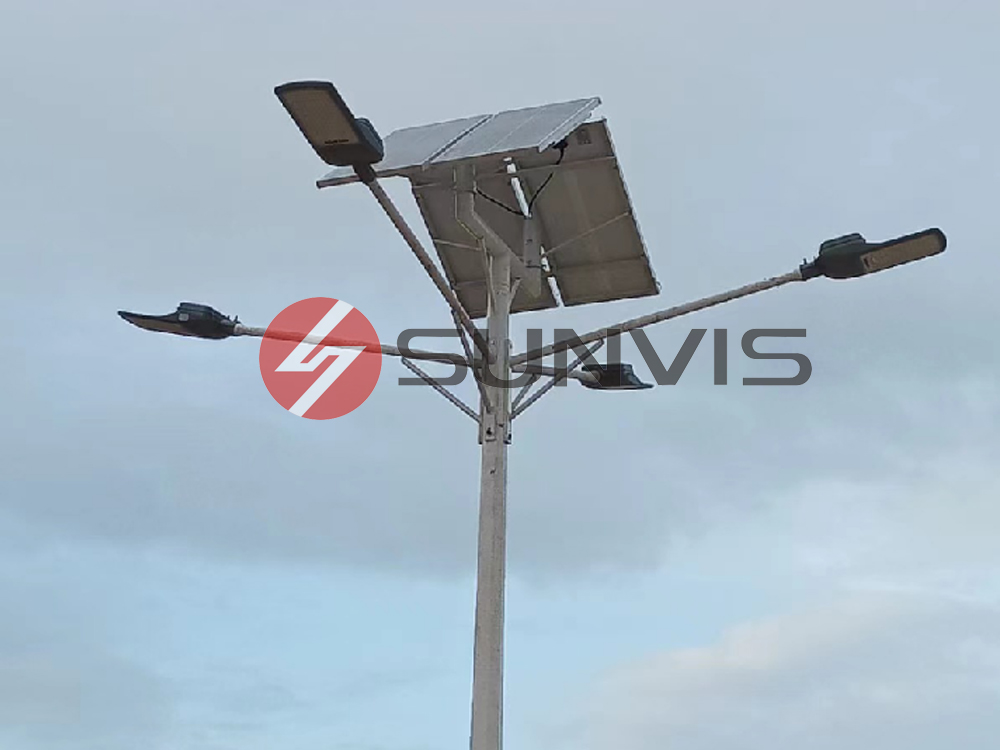
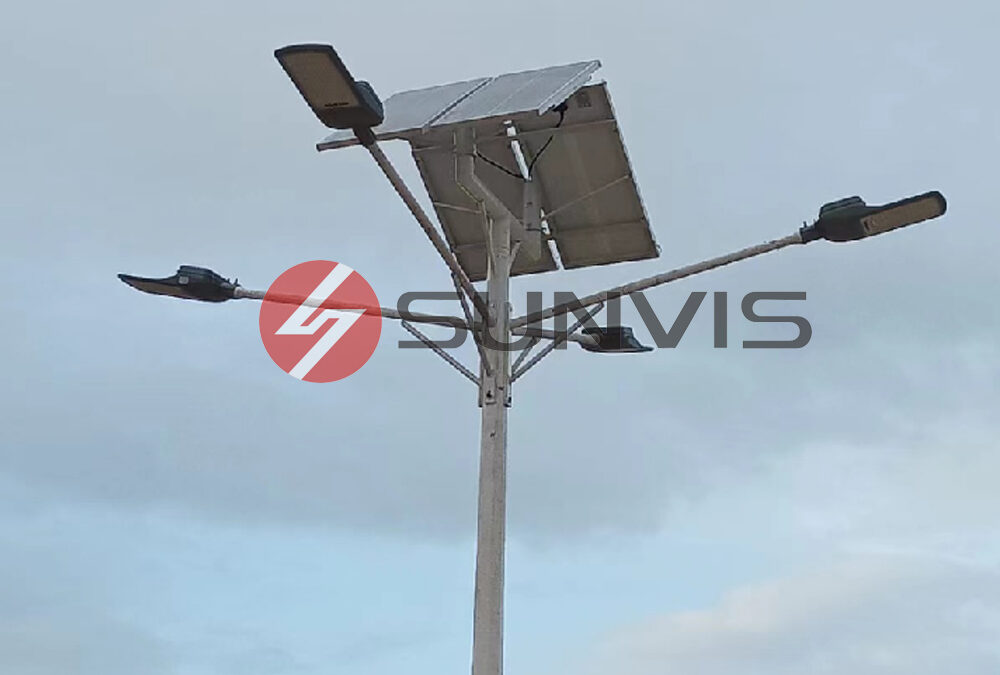
The light pole is the backbone of the solar street light system, supporting lamps, solar panels, batteries, and sometimes additional components such as GNSS control cabinets and antennas. Improperly selected poles can result in structural failure, inefficient lighting, or expensive replacement costs. First, my opinion is to prioritize durability and compatibility over bottomless cost cutting. Cheap poles may save money up front, but may fail under environmental stress, resulting in safety hazards and higher long-term costs.
Material selection: balancing cost and performance
Material selection is the foundation of durable poles. Here is a breakdown of common options, focusing on Q235B steel, stainless steel, and cold-galvanized steel, taking into account cost, wind resistance, and load-bearing capacity.Q235B Steel:
This carbon steel is widely used for its excellent strength-to-cost ratio. It is our top choice for budget-conscious projects because it offers strong load-bearing capacity and can be hot-dip galvanized for improved corrosion resistance. For a 6-8 meter long pole, Q235B with a wall thickness of 3-4 mm and an upper/lower diameter of 60-70 mm/140-160 mm can handle typical solar street light loads (20-30 kg) and wind speeds of up to 120 km/h. However, without proper galvanizing, Q235B can easily rust, especially in humid or coastal areas.

Stainless Steel:
Stainless steel (such as grade 304 or 316) is often used for patio or decorative solar lights, where it is corrosion-resistant and visually appealing. It is well suited to urban or coastal environments, but is significantly more expensive - typically 30-50% more expensive than Q235B. For a 4-6m patio pole, a wall thickness of 2.5-3mm and a diameter of 50-60mm/100-120mm is sufficient for lighter loads (10-15kg). I would only recommend stainless steel if aesthetics or extreme corrosion resistance are a priority.
Cold galvanized steel:
This is a cheaper alternative to hot-dip galvanized steel, but I strongly advise against it. The thin zinc coating wears quickly, especially at welds, and can rust within 2-5 years in a harsh environment. For equivalent structural specifications (e.g. 3mm wall thickness, 60-70mm/140-160mm diameter), cold galvanized poles cost 15-25% less than hot-dip galvanized Q10B, but fail more quickly, offsetting the savings.

Structural Specifications: Diameter, Wall Thickness, and Wind Resistance
Upper and Lower Diameters:
The diameter of the pole affects its strength and stability. For a 6-8 meter pole supporting a 20-30 kg load, an upper diameter of 60-70 mm and a lower diameter of 140-160 mm provides adequate stability for wind speeds up to 120-140 km/h. Taller poles (10-12 meters) for highways require larger diameters (e.g. 80-100 mm upper, 180-220 mm lower) to handle the increased wind loads and heavier components (40-50 kg).Wall Thickness:
Thicker walls improve strength but increase cost and weight. For Q235B steel poles, the standard thickness is 2-2.5 mm for 3-4 meter poles, 3-4 mm for 6-8 meter poles, while 4-5 mm is more suitable for 10-12 meter poles in windy areas. Due to their inherent strength, stainless steel poles can use slightly thinner walls (2 mm) to carry lighter loads, as stainless steel is often used for garden lights, and heights generally do not exceed 4M, but careful design is required to avoid buckling.
Wind resistance:
Wind loads are calculated based on pole height, component surface area, and local wind speed (see ASCE 7 or EN 40 standards). For example, a 6-meter long Q235B pole with a 3.5 mm wall thickness and a 60/150 mm diameter can withstand 120 km/h winds with a 0.5 square meter solar panel. In hurricane-prone areas, choose 4-5 mm thickness and a larger diameter (70/180 mm).
My advice : Always specify wind resistance 15-20% higher to account for extreme weather. Use structural analysis software or consult an engineer to ensure the pole specifications meet the wind and load requirements of your site.
Pole Height and Application
The height of the light pole determines the lighting coverage and must be consistent with the purpose of the project:4-6 meters:
Best for courtyards, paths or residential areas. Use Q235B or stainless steel with a thickness of 2.5-3 mm and a diameter of 50-60 mm/100-120 mm.6-8 meters:
Ideal for city streets or parking lots. Q235B with a thickness of 3-4 mm and a diameter of 60-70 mm/140-160 mm is cost-effective and durable.10-12 meters:
Suitable for highways or large open spaces. Specify Q235B with a thickness of 4-5 mm and a diameter of 70-80 mm/180-200 mm for heavy loads and strong winds.
Tip: Conduct a photometric study to optimize the height and avoid over- or under-lighting. I advocate for 6-8m poles in most urban environments to balance coverage and affordability.
Impact of environmental and site considerations on light poles
Many customers often only focus on height and thickness when choosing light poles, but often ignore the installation environment and site of the light poles, which have a huge impact on the service life of light poles:
Corrosion:
If installed in coastal or industrial areas, light poles must be hot-dip galvanized Q235B or stainless steel. Rusting of welds on cold-dip galvanized steel makes it unsuitable here.

Wind load:
Check the wind speed rating in your area (for example, ASCE 7 standard). I have seen projects fail because the installers underestimated the wind force, causing the pole to bend or fall. Always choose a pole with a wind rating 20% higher than the highest wind rating in your area to ensure safety.

Soil type:
Sandy soil or soft soil often requires the pole foundation to be buried deeper (6-8 meters for 1.5-2 meter poles) for stability. This requires the actual pole height to be 1-2 meters higher than the theoretical height, and rocky soil may require anchoring. Geotechnical engineering surveys are indispensable for large projects.

My position is: skip cold-dip galvanized steel in corrosive environments - it's a maintenance nightmare. Invest in hot-dip galvanizing of Q235B to extend the service life to 20+ years.
Cost and long-term value
Q235B steel:
The most cost-effective, hot-dip galvanized poles cost drama. The long service life (20-25 years) justifies the price.
Stainless steel:
The most expensive cost of similar specifications, suitable for advanced projects, but a bit overkill for standard applications.
Cold-dip galvanized steel:
Although it saves 10-15% of the upfront cost compared to hot-dip galvanized poles, it will need to be replaced or repaired within 5-10 years due to rust. My opinion: Q235B with hot-dip galvanizing is the best choice for 90% of projects. Avoid using cold-dip galvanized steel unless the environment is dry and maintenance is guaranteed.
Compliance and supplier selection
Make sure the poles meet standards such as local regulations. Choose a street light supplier with experience in hot-dip galvanizing Q235B poles (compliant with ISO 9001 or ASTM standards). Request calculations for load and wind resistance to verify specifications. I recommend avoiding suppliers who promote cold-dip galvanized steel without clear warning of its limitations. If you don't have a suitable supplier yet, please contact SUNVIS, we have more than 20 years of experience in exporting outdoor lighting and poles, and our products mainly include solar street lights, solar garden lights, solar traffic lights, city circuit lights, light poles, high pole lights, stadium lights, etc. Contact us.
Conclusion: Q235B wins
For solar street light poles, Q235B steel with hot-dip galvanizing offers an unbeatable balance of price/performance, provided it is designed with the appropriate diameter (60-70 mm in the upper part, 140-180 mm in the lower part) and wall thickness (3-5 mm).
Stainless steel is suitable for aesthetics or corrosive environments, but is more expensive, while rust issues with cold-dip galvanized steel make it a risky choice.
By prioritizing structural specifications, environmental resilience, and long-term value, you can choose a pole that will ensure decades of safety, efficiency, and durability.




 English
  Español
  Français
  Русский